
Dune
In 1984, the sleeper had awakened. I didn't get out of bed until about a decade later.

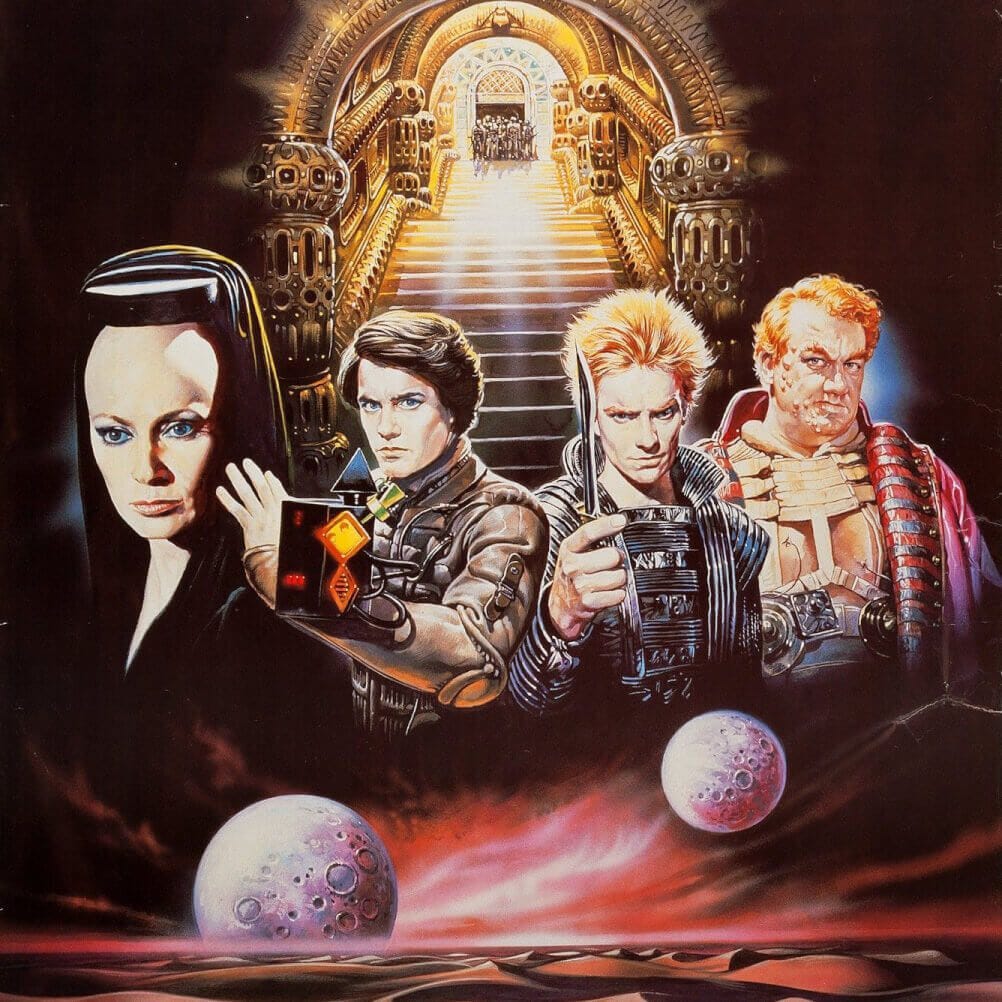
Back in 1984, David Lynch released his take on Frank Herbert’s Dune, and it definitely shook up the sci-fi world, although not always in the ways people expected. The movie didn’t get the warmest reception at first, and the production was kind of a mess, but over time it has gathered a very passionate cult following. Fans love it for its huge ideas, wild world-building, and the fact that it swings big, even when it doesn’t quite land. Even I didn’t see it when it was first released. I think I finally watched it on cable in the early to mid 1990s.
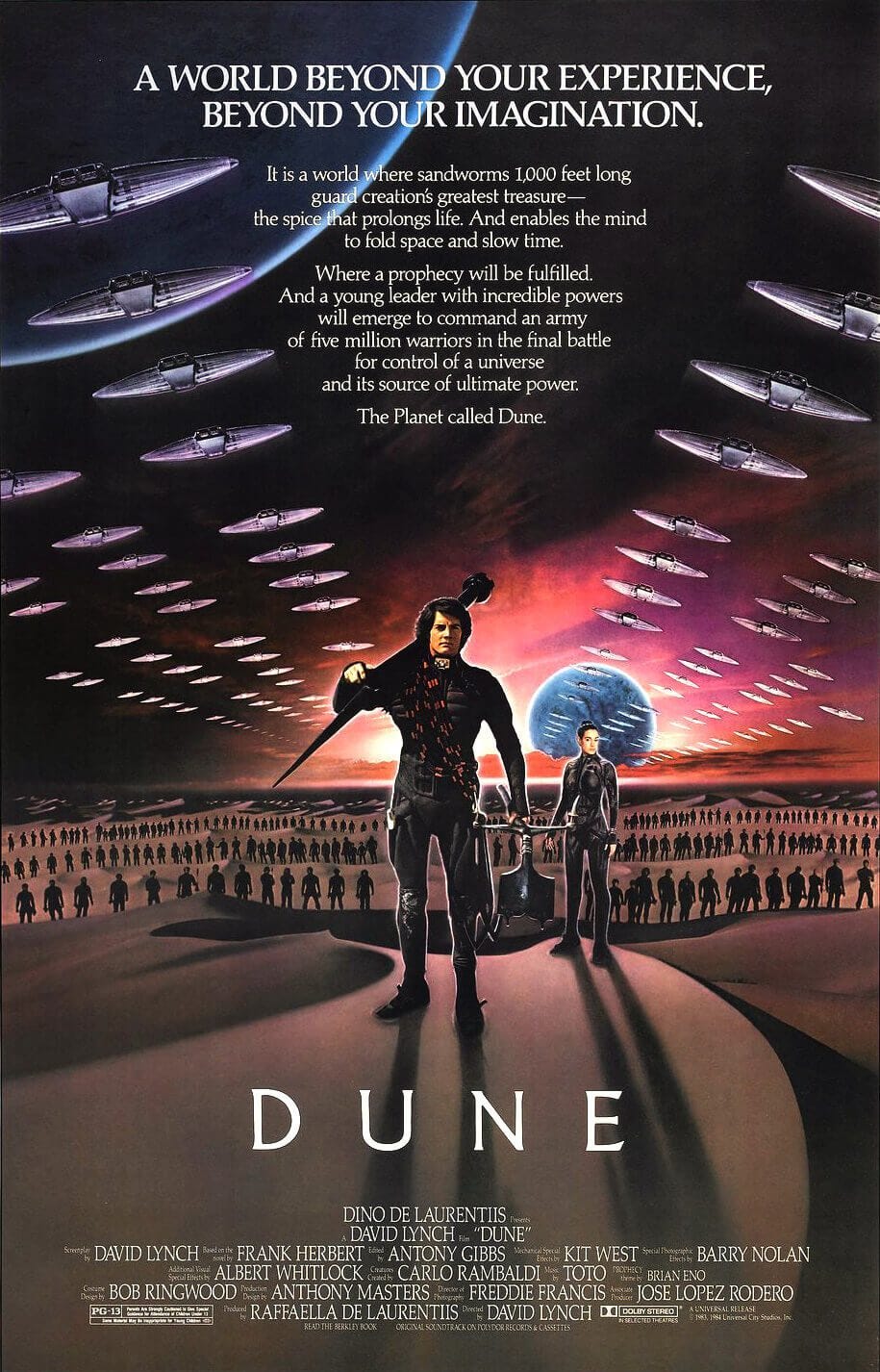
The story takes place far in the future on the desert planet Arrakis, also called Dune, which is the only place you can find the spice melange. This stuff is basically the universe’s most important resource. It helps people live longer, boosts awareness, and is essential for space travel. Naturally, everyone wants control of it, and things get dangerous fast.
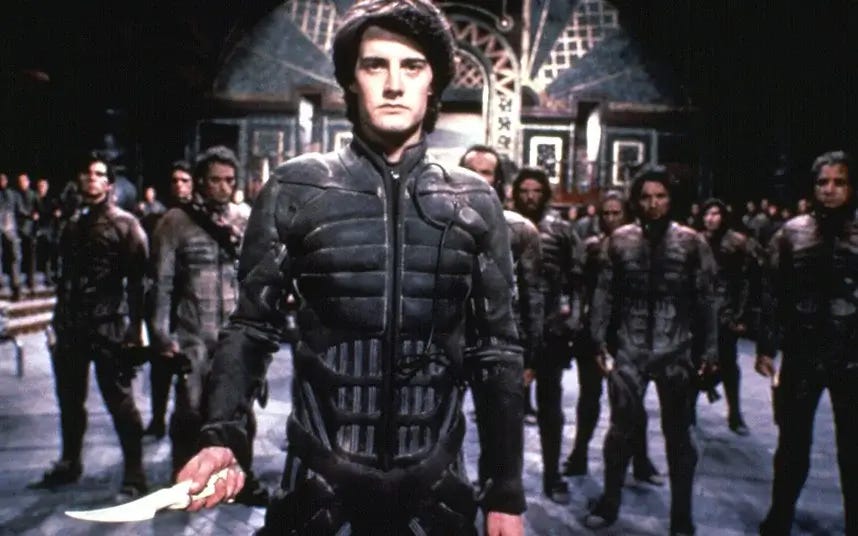
Our main character is Paul Atreides, played by a very young Kyle MacLachlan in his first movie role. Paul starts out as the heir to a noble house but gets thrown into a huge political and spiritual battle. His journey takes him from privileged son to a kind of prophesied leader who ends up joining forces with the Fremen, the people native to Arrakis, to fight back against the corrupt Emperor and the brutal House Harkonnen. The movie digs into themes like destiny, human potential, politics, and how people fit into the larger environment around them.
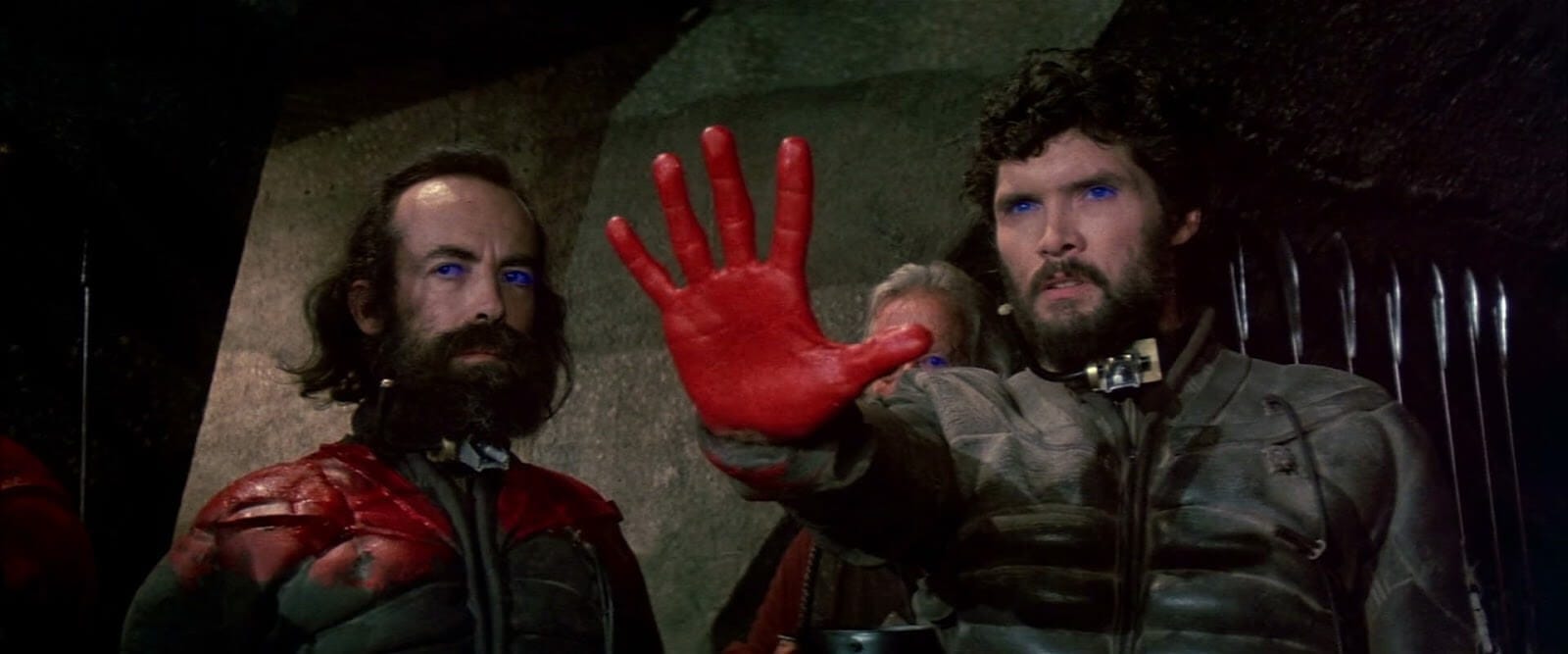
If nothing else, Dune is stunning to look at. The sets are massive, the costumes are unforgettable, and many of the special effects were impressive for the early 1980s. A lot of filmmakers still pull inspiration from its look. The soundtrack, created by the band Toto with help from Brian Eno, adds to the film’s strange, dreamlike atmosphere.
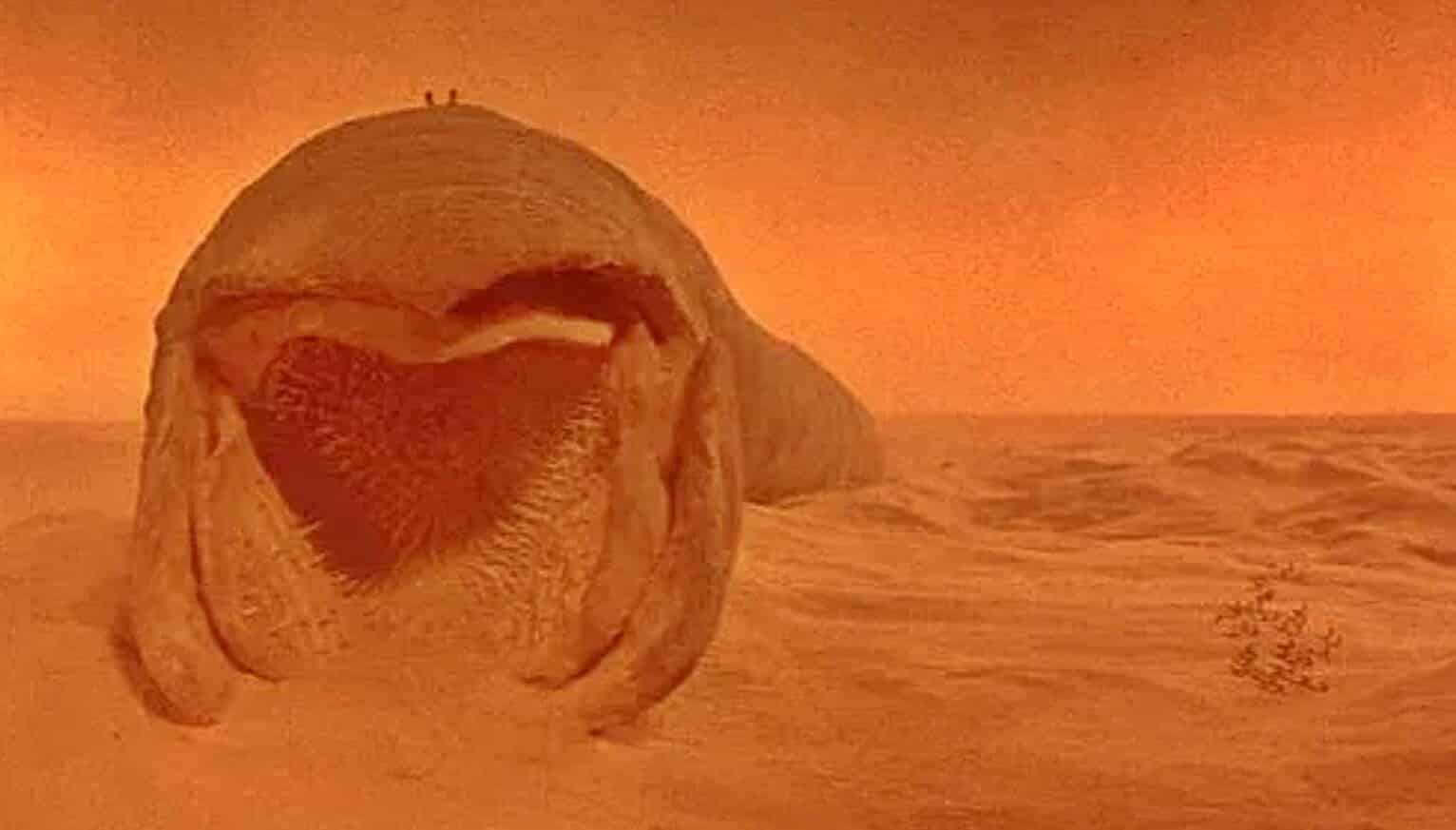
But getting this movie made was anything but smooth. Lynch had to deal with budget issues, creative push-back, and the nearly impossible task of squeezing a huge, complicated book into just a couple of hours. This led to different cuts and edits, which only added to the film’s reputation for having mysterious alternate versions. Still, despite everything working against it, the movie stands as a testament to Lynch’s bold style and Herbert’s enduring universe.
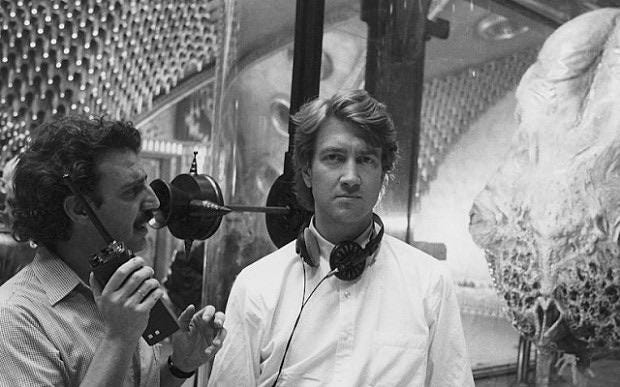
Even now, new viewers continue to discover it and find things to love or argue about. It is definitely divisive, but it is also impossible to ignore. Fans of the book see it as a unique interpretation, and fans of Lynch see it as a fascinating oddball moment in his career. Either way, it is one of those films that sticks with you.
And, full disclosure, I have never actually read Dune. It has never been high on my list, and if I do someday, it will be through an audio-book. I do not have the bandwidth to take on a dense series like that. When I do read, it is usually comfort material I have read before or something lighter, like Star Trek novels.
